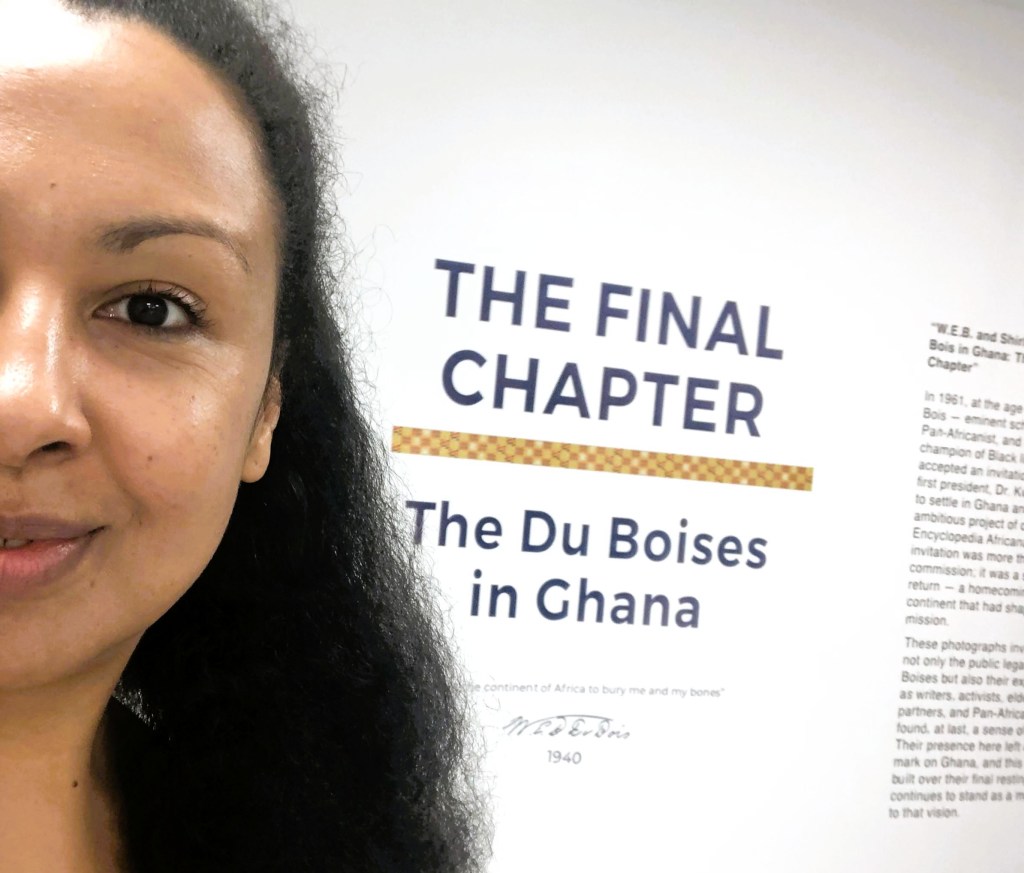
I didn’t expect a visit to the W. E. B. Du Bois Memorial Centre for Pan-African Culture in Accra to stay with me. I didn’t even know the name W. E. B. Du Bois until a friend – who took me to the centre about two months ago – told me about him.
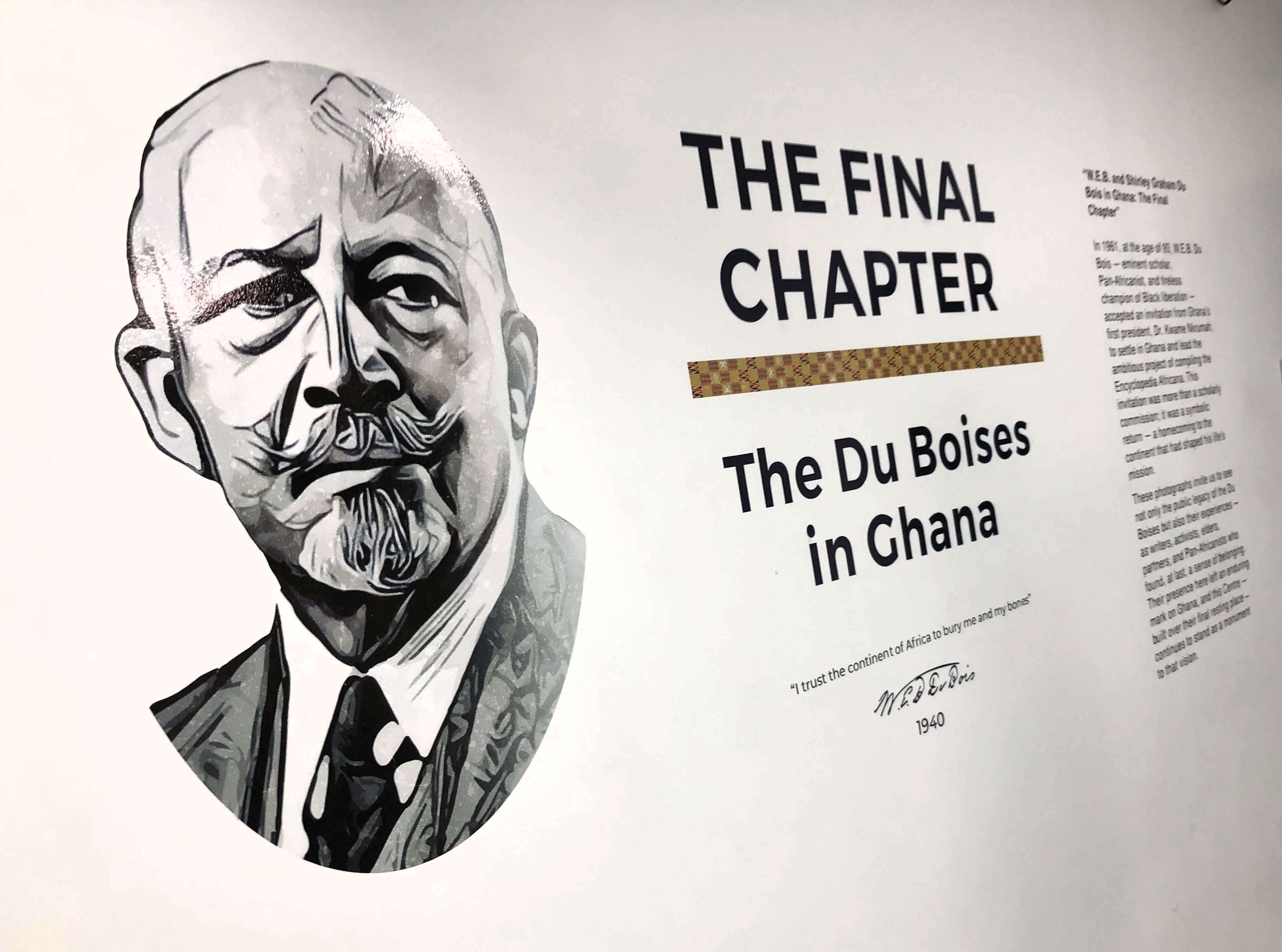
W. E. B. Du Bois was an African American scholar, historian and civil rights activist.
While walking through the Memorial Centre dedicated to his life, I began to appreciate the extraordinary journey that brought him to Ghana during the final years of his life.
In 1961, President Kwame Nkrumah invited Du Bois to Accra to lead the ambitious Encyclopedia Africana project. The aim was simple in principle but monumental in practice: to create a comprehensive encyclopaedia of African history, culture and achievement written from African perspectives rather than through the lens of colonial scholarship.
This story was introduced to me by a very knowledgeable guide at the Du Bois Centre, who led us through the exhibition step by step, following the footprints marked on the floor. I must admit I occasionally wandered off the marked path, jumping ahead or going back whenever something caught my attention more than the rest. Standing in front of the volumes of the Encyclopedia Africana was one of those moments.
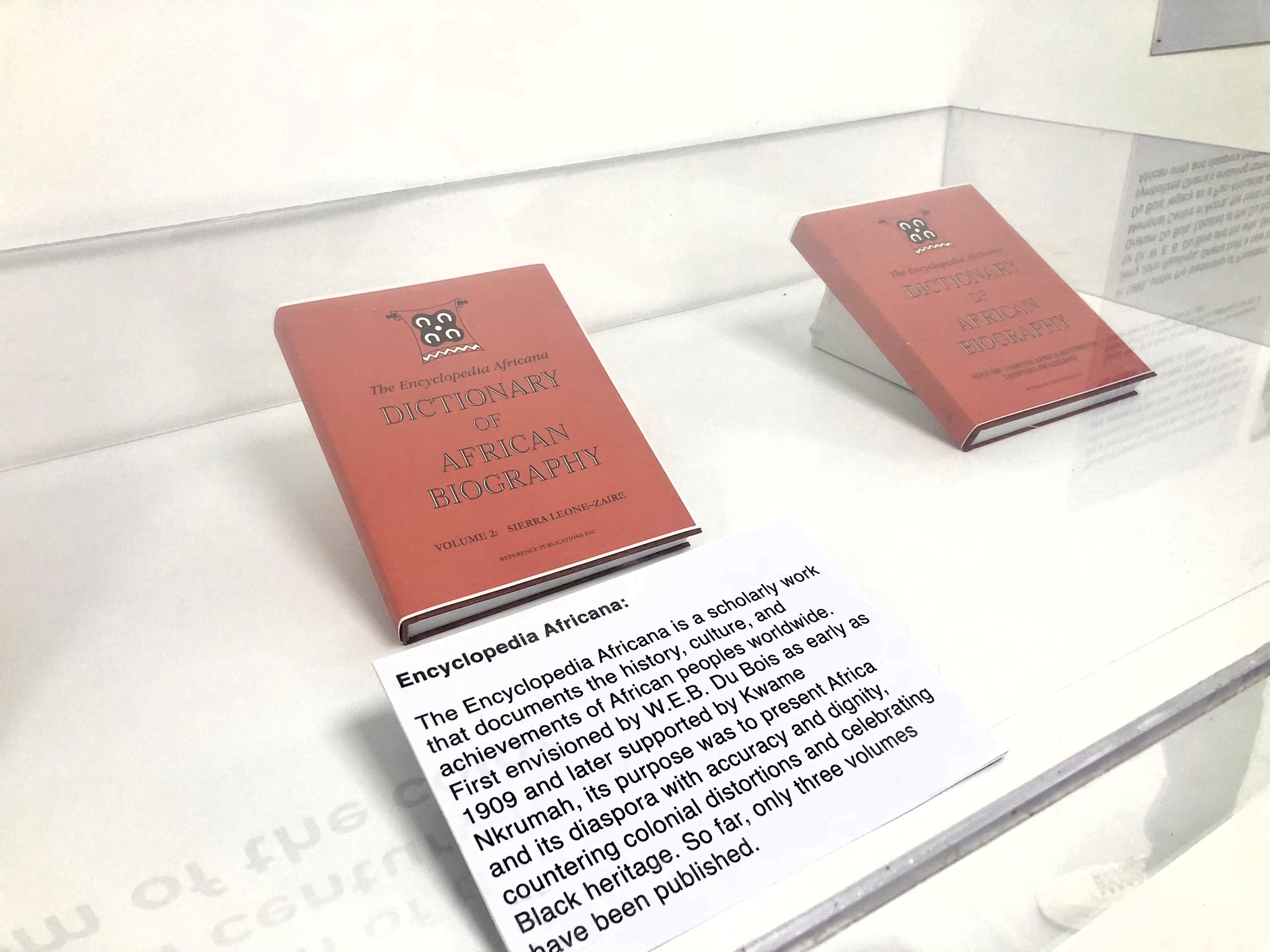
Leaning over the glass display protecting these old manuscripts, I found myself thinking less about the books and more about the idea behind them.
Who gets to write history, and how?
Who decides which stories matter?
And what happens to the countless stories that are never written or preserved?
Once again, this African proverb comes to my mind:
“Until the lion learns how to write, the story will always glorify the hunter.”
For centuries, much of Africa’s history was documented by outsiders. That scholarship often contained remarkable, but one-sided research, shaped by the colonial perspectives, priorities and assumptions of its time.
The Encyclopedia Africana represented something different. It was about making space for African history, yes, but perhaps more importantly, for the voices, experiences and interpretations that had too often been overlooked.
As someone of Polish and Nigerian heritage who lives in London, these questions resonate with me. Growing up in Poland, I learned one version of world history. Living in Britain introduced another. Travelling regularly across West Africa continues to challenge assumptions I didn’t even realise I held.
Each place remembers differently.
Each nation tells itself a story.
None tells the whole story.
Maybe that is why the Du Bois Centre became a reminder that history is never complete.
Every generation inherits a narrative and, consciously or not, decides whether to repeat it, question it or expand it.
For transparency, at one point, I questioned why an African American scholar from the United States, rather than an African scholar from Africa, became part of this collaboration with President Kwame Nkrumah. But ultimately, that decision was made by an African president who must have had his reasons, and Du Bois appears to have earned that honour.
Du Bois was in his nineties when he moved to Ghana. Rather than slowing down, he committed himself to one final intellectual project – one that recognised Africa not as a footnote to world history but as one of its central protagonists. Although he did not live to see the Encyclopedia Africana completed, the vision behind it continues to influence historians and researchers today.
As publishers and storytellers, we often focus on individual books, authors and readers. Yet projects like the Encyclopedia Africana remind us that publishing has always carried a broader responsibility.
Books shape collective memory, determining which voices become part of the historical record and which disappear altogether.
We live in an age when information is abundant, but attention is scarce. Complex histories are increasingly reduced to headlines, algorithms and social media posts. Nuance is often sacrificed in favour of “truths” that are more digestible or easier to accept.
At Mixed Heritage Press, we believe that the most meaningful stories rarely fit neatly into simple categories. They contain contradictions, multiple perspectives and uncomfortable truths. They ask questions rather than offering easy answers.
My visit to the W. E. B. Du Bois Memorial Centre reminded me that preserving those stories is not simply an academic exercise.
It is an act of cultural stewardship. Every writer, editor, publisher and reader contributes to that same project.
Ensuring that more voices are heard, history continues to be made, documented and remembered, making our understanding of one another a little richer.
The people at the heart of the stories deserve to tell them in their own voices.
Monika


Leave a Reply