
Paris is the place where words began to matter differently – the prologue to my creative writing journey.
I first visited over two decades ago. I came from London to see my cousin, who was living in a small Parisian apartment she shared with a housemate. The space was tight – we kept brushing shoulders in passing – but it didn’t matter.
Outside, Paris stretched full of possibility – café chairs and tables spilled onto pavements, inviting you to sit down and linger over a drink: chai tea in our case, which twenty years later turned into matcha.
The city felt like freedom then – maybe because it was Paris, or maybe because we were too young to be burdened by the curse of advanced adulting.
Ayo was a new artist at the time, not yet signed, writing lyrics and composing melodies every day on her guitar, Billy – of course she had given it a name. Her words carried rhythm and soul.
I remember the way her face lit up when she told me about opening for the iconic American singer James Brown. Her songs were already finding their place in the world.
Meanwhile, I was still a student jumping from planes to Eurostar trains between Poland, England, Germany and now France.
I could write too, but my writing had no melody. It was functional, academic – designed to pass exams or complete assignments, like my thesis on the marketing genius of Coca-Cola. I never thought I would feel the urge to write creatively.
But it came. Right here in Paris.
I can still picture Ayo with Billy, next to a small whiteboard – strumming, pausing, jotting lines, humming them back, scratching them out, then starting again. The sound of her voice filled the cramped apartment, making it feel so much more spacious, like an important place where important things were taking place.
She kept chasing the version that matched the sound she had first heard in her soul – songs drawn from life. At times it was unclear who was in control: Ayo or the music.
Watching her process – the creased brow, the grimaces, her sudden smile when something clicked – made me want to pour my own soul onto paper. To write simply for the joy of it. To tidy up and air out the cluttered corners of my being. To process and understand what was happening in my life back then. To work through it all so I could become better. That time in Paris was part of what set me on the path to poetry.
My poems found their readers – published in UK magazines and papers, shared at events, even earning the odd appearance on independent TV. Nothing grand; the biggest reward was always what writing did for my soul.
Ayo’s process, from imperfect first drafts to brilliant songs ready to be shared, showed me something essential: first drafts are messy. It’s okay to start there. The journey from that point to the final version is just as important as the destination. That journey – the learning, the becoming, the discovery – needs time and effort. Poems, like people, need ripening.
Well, this was true back in the day. In this age of AI, that slow process is often skipped and that, I think, can be a great loss.
But it was here, in Paris, that I realised writing could be more than useful – it could be about creating beauty from the ugliest parts of life. Eventually, I self-published a poetry book – about feelings, relationships, finding joy in sadness. Of course, I asked Ayo to write the foreword. It only made sense – a full-circle moment.
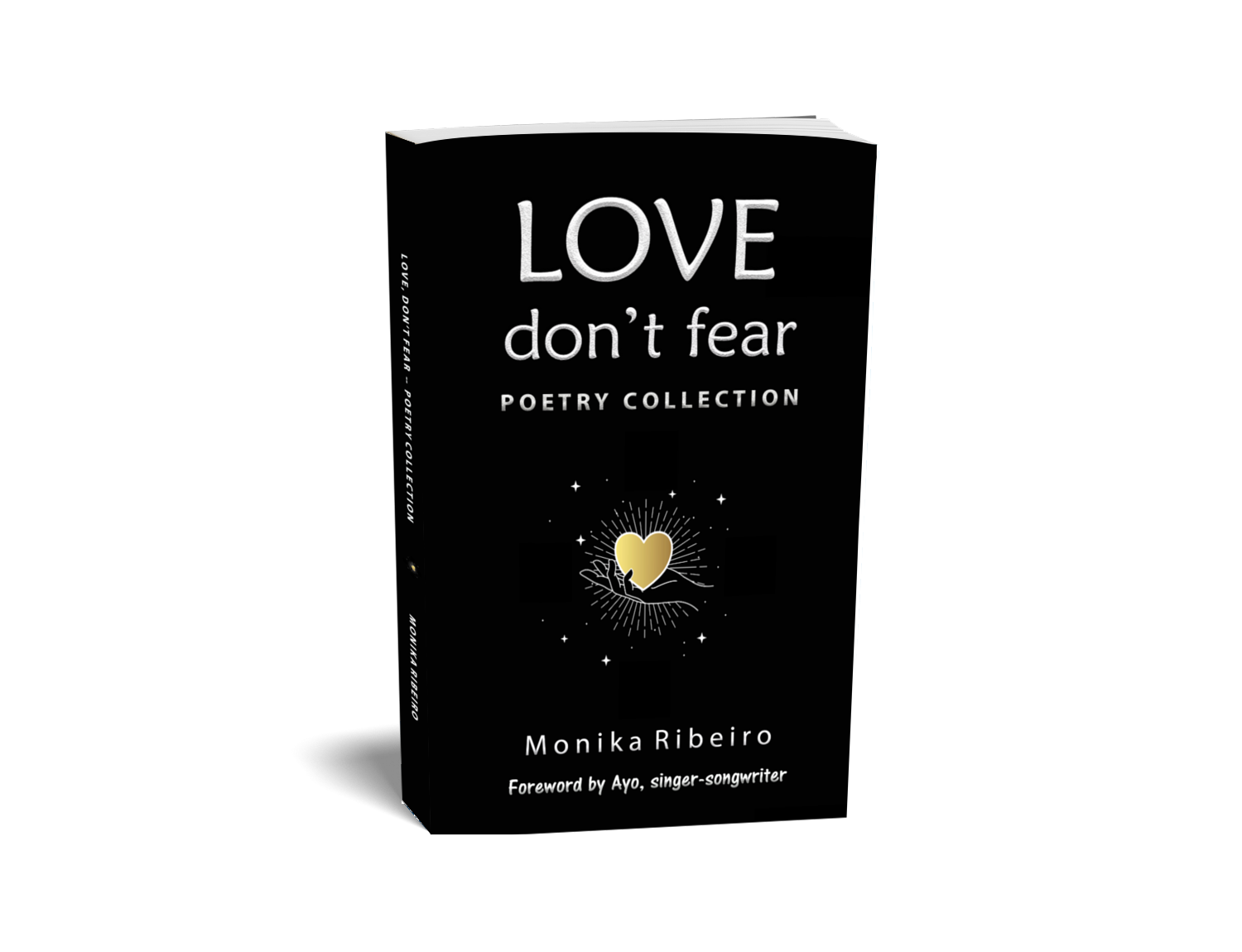
I kept writing for years. Then life shifted.
Confronted with more pain than words could wash away, I stopped writing poetry – for years. I didn’t want to talk about relationships anymore. I didn’t want to write from a heart that felt uninspired. Instead, I became the editor and publisher of other people’s works – finding inspiration in their stories.
Then an invitation came – to write for the exhibition On the Vastness of our Identities in France. Not Paris this time, but Arles – the festival Arles Rencontres.
I wasn’t asked specifically for poetry, yet poetry came anyway, in the form of my poem Switching. Earlier this year, the exhibition resurfaced in Bordeaux, and so did my poem.
My poetry, it seems, likes finding new beginnings in France.
This time it was about travel, belonging, and living in many worlds at once – somewhere between Europe and Africa. That sense of in-between places made me think back to my earlier days in Poland.
Some stories are universal, I know, but I wonder what could have happened if I had found myself in the stories of my country. I remember reciting poetry as a young girl at school and being praised by my Polish teachers, yet still never quite having the courage to write my own stories.
Had I had the chance to read stories with brown protagonists, written truthfully by brown Polish authors who understood my experience, maybe I would have found my voice much sooner, in Poland.
But I tell myself that everything happens in its time and for a reason. Life is a journey; things fall into place – and all the other clichés, often wise and truthful, that we lean on when we question life’s seemingly strange ways or sloppy timelines.
And yet, it was mostly the lack of representative literature I grew up with that nudged me to create Mixed Heritage Press, a publishing home for underrepresented voices.
Seems like everything really does happen for a reason, after all.
Either way, poetry was conceived in me not at university but in the school of life, through its melodic cousin – introducing me to creative writing on my own terms. Not for exams. Not for work. But because my heart needed it at the time. Writing is therapy – or better; certainly cheaper.
Poetry was born in me in Paris, on those steps between utility and creation. Creative writing – without AI – feels like climbing a long, winding Parisian staircase: each turn revealing more of the view, guiding you in your becoming, as long as you keep climbing.
Paris is the place where words began to matter differently.

 MIXED HERITAGE PRESS (MHP)
Leave a Reply