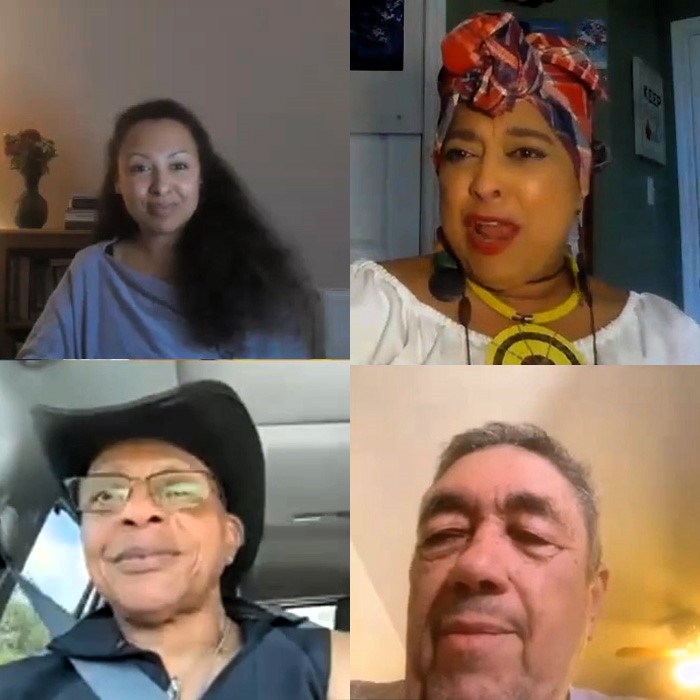
June is Read Caribbean Month, which is why I decided to bring together a few brilliant voices from the Caribbean diaspora for a conversation about language, literature, and cultural legacy. It was a rich and emotional exchange – with laughter, stories, and reflections that reminded me why I love publishing and curating these spaces.
My guests were three Mixed Heritage Press authors with roots in Jamaica and Barbados, living across Canada and the United States. Each of them brought their own unique perspective on identity, migration, and language.
To open the dialogue, Tania Hernandez recited the iconic poem Colonization in Reverse by Dr. Louise Bennett Coverley, better known as Miss Lou.
A little background: What historical event inspired Colonization in Reverse?
In the late 1940s and 1950s, many Jamaicans and Caribbeans moved to Britain, part of the Windrush Generation who came after World War II to help rebuild the UK. Miss Lou captured this moment in this iconic dialect poem.
If you’ve never heard it before, please take a moment to enjoy the short clip here or watch the entire performance and conversation on my YouTube channel, Afropean Monika.
This dialect poem is iconic because it flips the narrative of post-war migration and tells a witty, powerful story of Jamaicans “colonizing” England “in reverse.” I can’t wait for you to see how Tania comes alive through the rhythm and energy of Jamaican Patois, which by the way is reportedly the third favourite language among English speakers.
What I always find interesting is how bilingual people shift when navigating between their languages – especially when those languages carry such different “personalities.” For instance, Canadian Tania (speaking in standard English) is far more reserved than Jamaican Tania, even though the two are one and the same person.
The saying that comes to mind is, “To have another language is to possess a second soul.” – Charlemagne
On this note, one of the most fascinating parts of our conversation was around language formation.
We talked about how language, especially in post-colonial societies, becomes more than communication. It becomes identity, resistance, a tool of redemption. Whether it’s Jamaican Patois or Bajan quick talk, these languages are proof that Caribbean people have always found ways to survive, express, and redefine themselves.
In fact, much of what we discussed circled back to what Miss Lou dedicated her life to: validating and elevating Caribbean voices. And not just the polished ones, but the ones from the ground – the ones often overlooked or dismissed. Tania called Miss Lou a “poet warrior,” and I could not agree more.
I’m not Caribbean, but I enjoy multicultural stories – what better time to celebrate these than during Caribbean Heritage or Read Caribbean Month?
I believe that opening yourself up to other people’s cultures is an act of empathy and learning – one that fosters greater unity.
From Tania’s folkloric passion for Miss Lou’s work to Ward’s historical documentation of where he grew up in Barbados, as well as Delvon’s moving story of being given away as a child but then re-uniting with family after 53 years, our conversation was full of love, cultural nuance, history and truth.
Please watch Part One now and stay tuned for Part Two where we’ll continue exploring these authors’ diaspora stories.
If you’re passionate about the Caribbean, culture-driven literature, or just curious about what it means to belong to more than one world – this poetic Read Caribbean Month talk is for you.
Thank you for being here,
Monika

 MIXED HERITAGE PRESS (MHP)
Leave a Reply