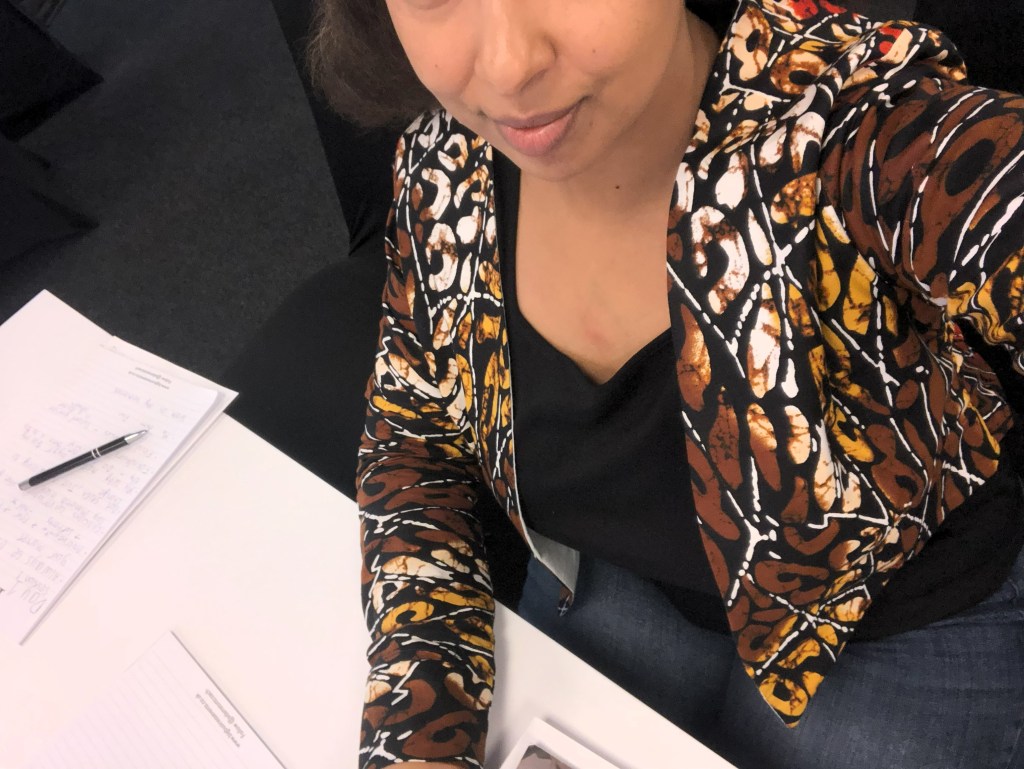
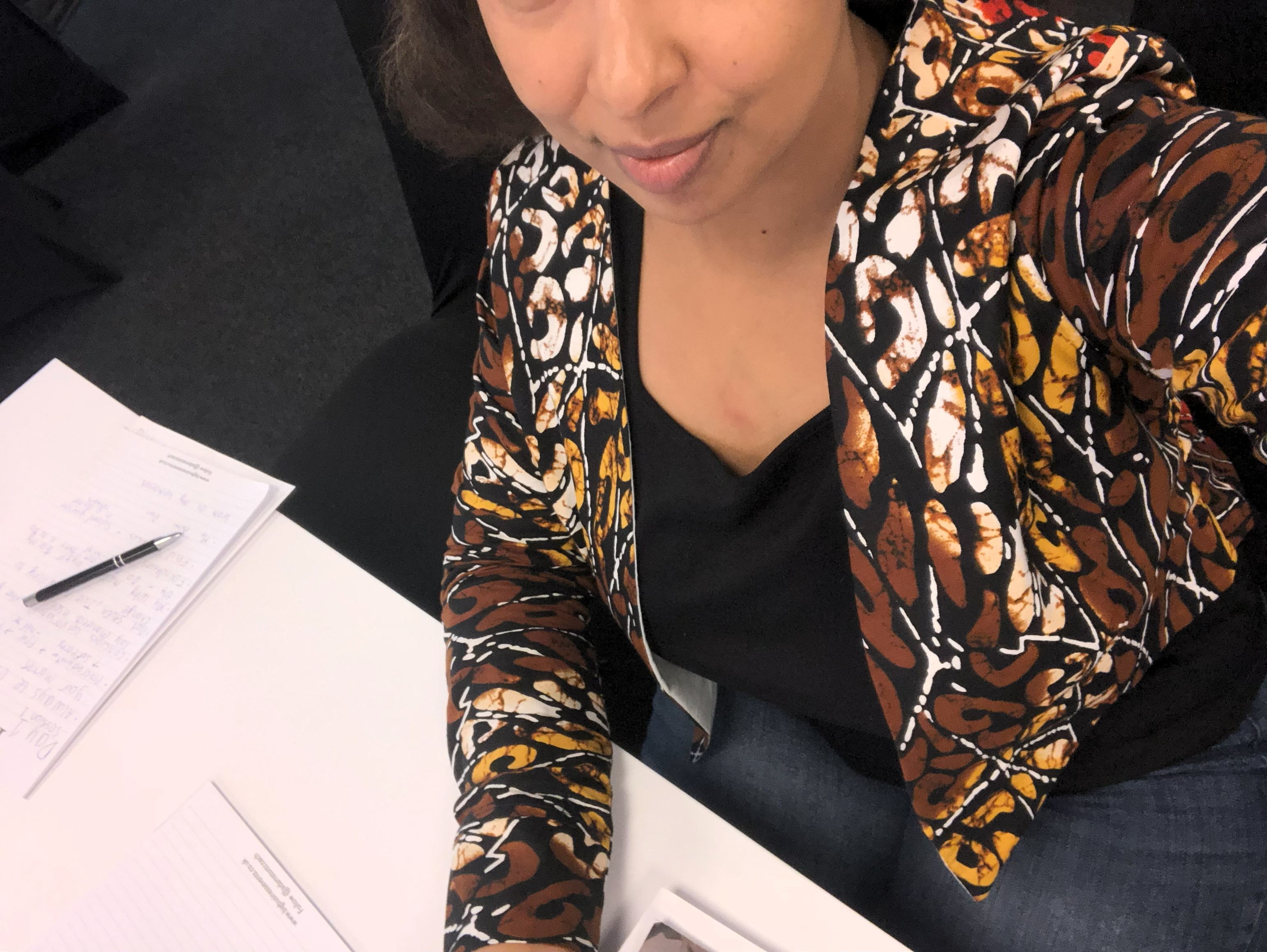
In the featured image, I am wearing a jacket crafted from vibrant African fabric that holds a special place in my heart. But before I delve into this sentimental creation’s origin story, let’s explore a few uniquely West African traditions.
West Africa is home to many enduring customs, including the craftsmanship of seamstresses (or sewists) and the popularity of having clothing sewn rather than always bought in stores. This unique tradition of wearing authentic African garments is not just a fashion statement but a powerful symbol of identity. It’s easily noticeable in West African communities outside the continent, but even more so when you’re there. Those different attires serve as cultural symbols and, sometimes, even as the medium of communication and storytelling within diverse ethnic groups. Let’s delve into three examples of ancient traditions and fabrics that remained on the continent and captivated the world…
Ankara Fabric: Ankara fabric, also known as African wax or Dutch wax print fabric, is often made outside Africa (usually in the Netherlands). This one is a little controversial, raising the question of how African some African prints truly are. But Ankara is still very popular on the continent and commonly associated with West African fashion. It is used to make dresses, skirts, shirts, headwraps and more. It is known for its bold designs and bright colours, and it holds cultural significance in many African countries, where it is often worn for special occasions and ceremonies.
Adire, meaning “tie and dye,” is a traditional textile art form among the Yoruba tribe of Nigeria (my people). It involves resist-dyeing techniques, where patterns are created by applying wax or starch to the fabric before dyeing and drying it, usually in the hot African sun. However, Adire is not immune to the challenges of our post-industrial-revolution globalised world. It is facing significant threats, particularly from China, which produces cheaper but inferior imitations of the design.
Kente Cloth: Originating from the Ashanti Kingdom of Ghana, Kente cloth is a silk and cotton fabric characterised by its vibrant colours and intricate patterns. Each Kente design has a symbolic meaning, representing various aspects of Ghanaian culture, history, and values.
Of course, many other examples exist, but the above fabric types interest me the most. They are popular gift items amongst my Nigerian or Ghanaian family, so I have several pieces lying around the house. Moving on, when I stumbled upon this lovely African print fabric (see pics) during my recent visit to Ghana, I felt inspired to sew a dress.
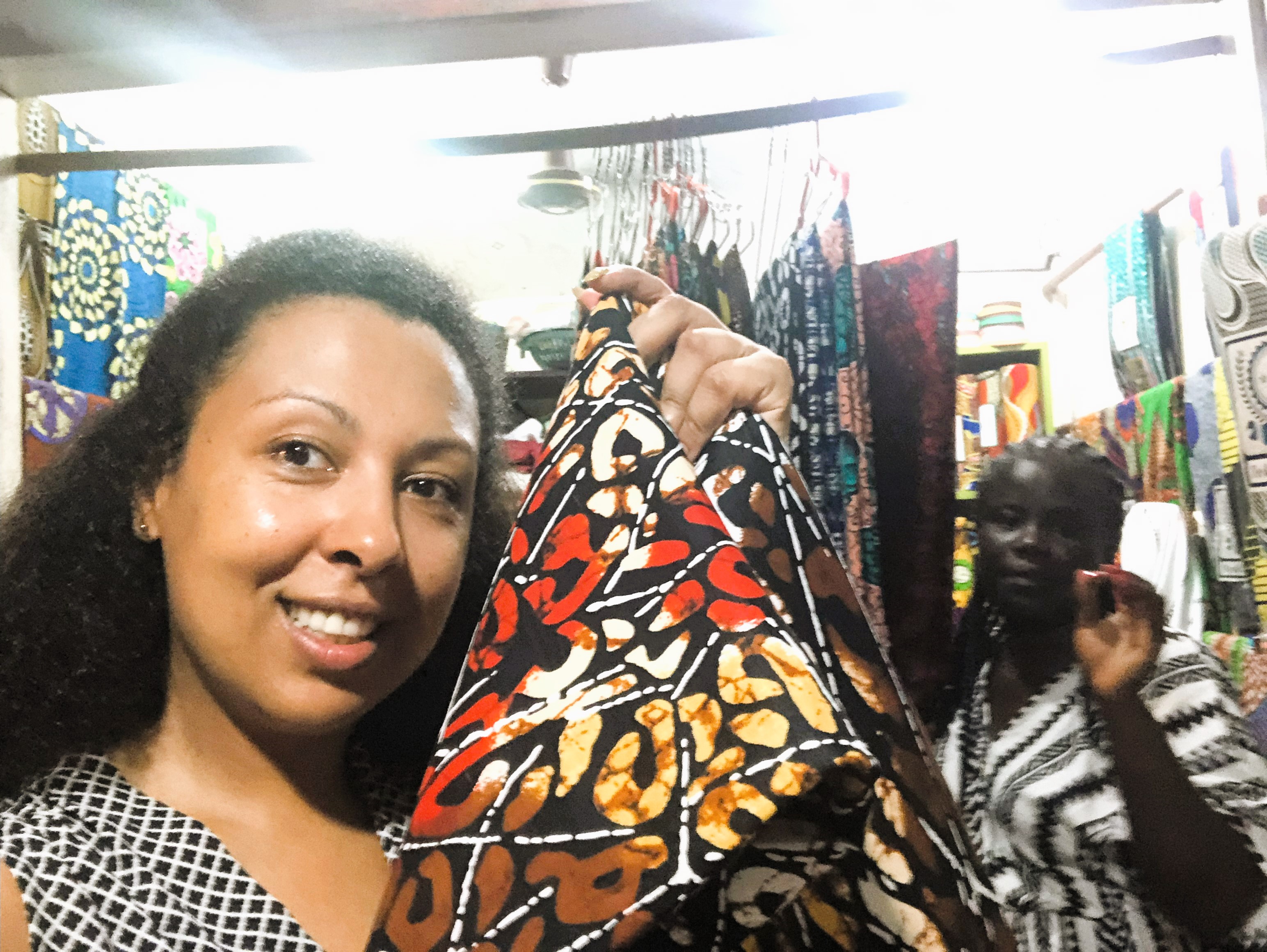
Of course, I am not a seamstress, so I shared this desire with a local friend who introduced me to a skilled Ghanaian sewist. He measured me meticulously, and we had a few discussions before finalising the design.
After about a week of anticipation, a few days before my return to London, I went to his studio to collect the transformed fabric, now custom-made dress of my design. But some adjustments were needed, so I stayed around and observed his skilled hands at work for a couple of hours. Witnessing his expertise, especially against the backdrop of the workspace’s simplicity, was mesmerising, and it reminded me not to take things for granted.
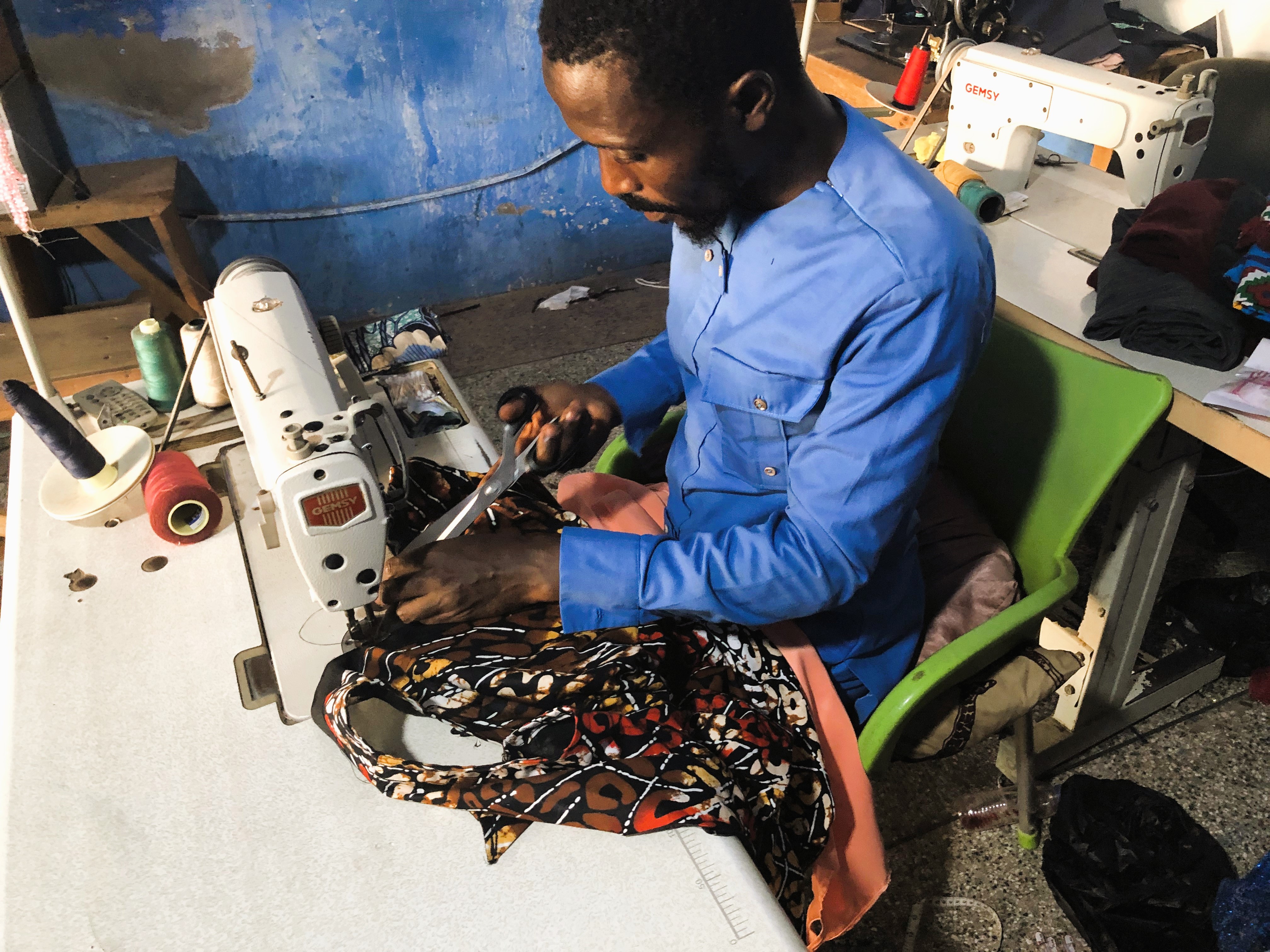
The heat was intense—there was no AC, ergonomic chairs, or decorative embellishments, apart from colourful fabric pieces of different textures scattered around the studio, emphasising the vibrant, diverse energy of the land. Then, the power suddenly went out (it’s common in Ghana)!
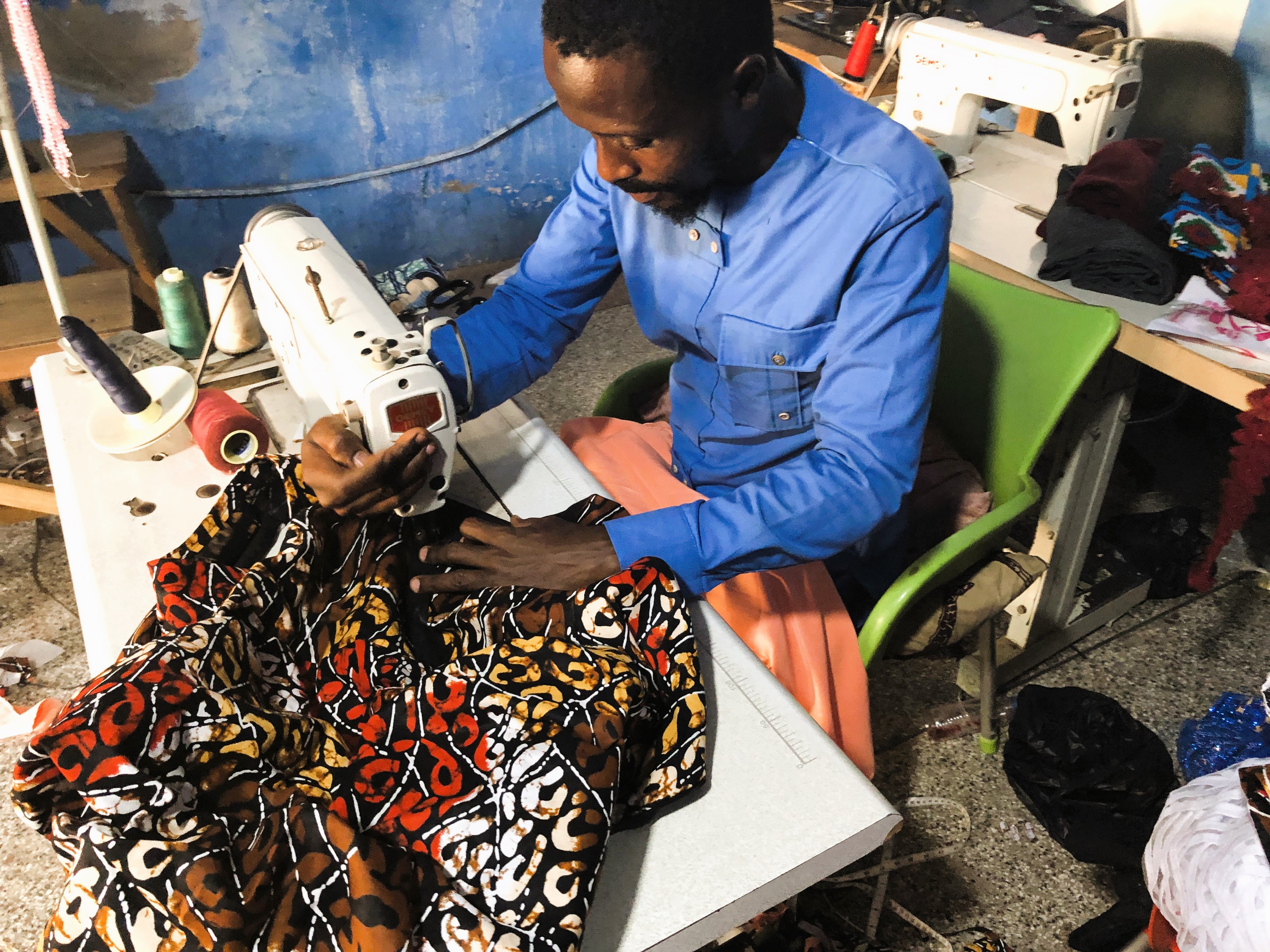
I could feel huge drops of sweat noisily fall to the ground from my forehead. Okay, I’m being melodramatic here, but it is to say that, apart from the magnified heat due to the fans’ inability to do their job anymore, I was afraid that he wouldn’t be able to finish on time and I’d be forced to leave the country without my custom-made dress. Tragedy, I know. Yet, my sewist calmly transitioned from an electric to a manual sewing machine, determined to finish the task before the fast-approaching sunset. Thanks to his skill and dedication, my outfit was brought to life soon after.
West Africa is humbling – a poignant reminder not to take small conveniences (such as electricity) for granted.
As an Afro-European living far from these handicraft ways of doing things, I’m captivated by the garments and the way they come alive in the hands of real people. This recently magnified fascination may have to do with the new era of the AI revolution and robotics threatening to make mere human labour and talents irrelevant. Yes, maybe that’s part of it. Still, I am charmed by the creativity and originality of diverse West African regions, showcasing locals’ incredible craftsmanship.
This captivation led me to start my YouTube channel, @Afropean Monika. Check it out if you’d like to see how the dress came out.
By the way, we used the leftover fabric to make the cute little jacket you see me wearing in the featured image. Because why waste a good thing…
Thank you for stopping by; I appreciate you!

 MIXED HERITAGE PRESS (MHP)
Leave a Reply